
.svg)
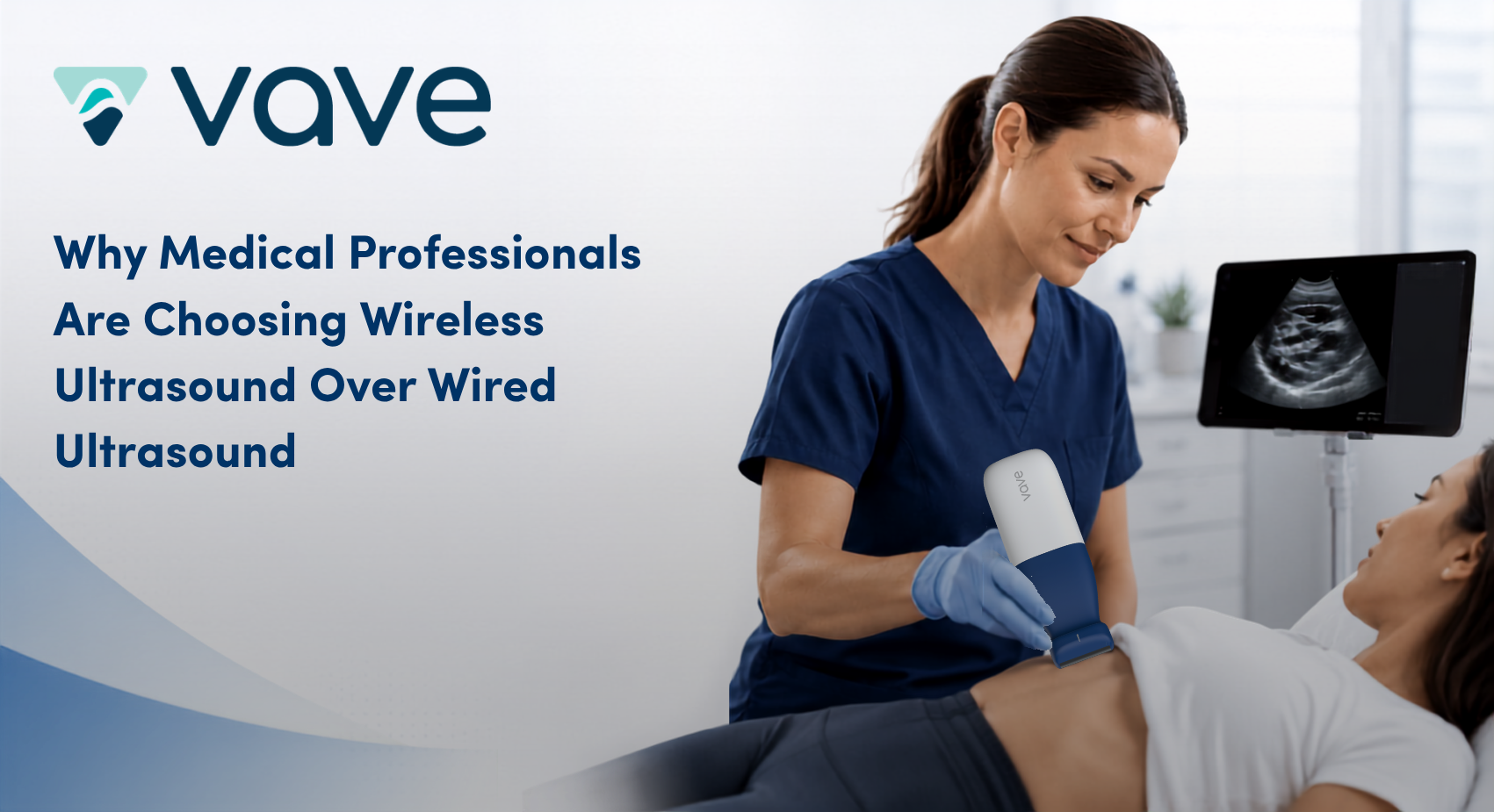
Healthcare is becoming faster, more mobile, and increasingly centered around the patient. As a result, more clinicians are replacing traditional wired ultrasound systems with wireless ultrasound technology that delivers high-quality imaging without the limitations of cables.
Whether you're using a handheld ultrasound in the emergency department, a portable ultrasound in a rural clinic, or a wireless ultrasound probe in a busy private practice, wireless technology helps providers improve efficiency while delivering exceptional patient care.
Here's why medical professionals across nearly every specialty are making the switch.
Traditional ultrasound systems often require clinicians to work around cables, carts, and limited positioning. A wireless ultrasound system eliminates those obstacles, allowing providers to move naturally around the patient while maintaining optimal probe positioning.
This added mobility is especially valuable in:
Because a wireless ultrasound probe connects directly to a smartphone or tablet, clinicians have the flexibility to scan wherever patient care happens.
Modern medicine is increasingly moving diagnostics closer to the patient. A portable ultrasound allows clinicians to perform imaging at the bedside instead of transporting patients to another department.
Using a POCUS device at the point of care enables providers to:
For critically ill patients, bedside ultrasound can eliminate unnecessary movement while helping clinicians respond more quickly to changing conditions.
Many physicians work across multiple hospitals, surgery centers, and outpatient clinics. Transporting a traditional ultrasound machine between locations is often impractical.
A handheld ultrasound changes that.
Compact enough to fit in a backpack or medical bag, a wireless ultrasound system can travel with the provider, allowing them to bring diagnostic imaging wherever they practice.
This portability benefits:
Instead of purchasing multiple ultrasound systems, clinicians can use one device across several practice locations.
One of the greatest advantages of a wireless ultrasound system is improved clinical workflow.
Without cables to untangle or carts to maneuver, providers can move quickly between patients and begin scanning almost immediately.
Wireless ultrasound helps practices:
For busy healthcare organizations, even small workflow improvements can translate into seeing more patients while maintaining high-quality care.
Beyond portability, clinicians appreciate the everyday convenience of wireless technology.
Benefits include:
These advantages have made wireless ultrasound an increasingly popular choice across emergency medicine, cardiology, anesthesia, critical care, primary care, orthopedics, sports medicine, and women's health.
As healthcare continues to prioritize efficiency and accessibility, wireless ultrasound is becoming the preferred imaging solution for clinicians who need flexibility without compromising performance.
Whether you're looking for a portable ultrasound for your private practice or a POCUS device that can travel from the clinic to the hospital, wireless technology offers the mobility, speed, and convenience today's providers expect.
The future of medical imaging isn't confined to an exam room or a cart—it fits in your hand. A wireless ultrasound probe empowers clinicians to deliver faster diagnoses, streamline workflows, and bring high-quality imaging directly to the patient, wherever care is needed.
Ready to learn more? Book your Demo Today!
.svg)
.svg)
Healthcare is becoming faster, more mobile, and increasingly centered around the patient. As a result, more clinicians are replacing traditional wired ultrasound systems with wireless ultrasound technology that delivers high-quality imaging without the limitations of cables.
Whether you're using a handheld ultrasound in the emergency department, a portable ultrasound in a rural clinic, or a wireless ultrasound probe in a busy private practice, wireless technology helps providers improve efficiency while delivering exceptional patient care.
Here's why medical professionals across nearly every specialty are making the switch.
Traditional ultrasound systems often require clinicians to work around cables, carts, and limited positioning. A wireless ultrasound system eliminates those obstacles, allowing providers to move naturally around the patient while maintaining optimal probe positioning.
This added mobility is especially valuable in:
Because a wireless ultrasound probe connects directly to a smartphone or tablet, clinicians have the flexibility to scan wherever patient care happens.
Modern medicine is increasingly moving diagnostics closer to the patient. A portable ultrasound allows clinicians to perform imaging at the bedside instead of transporting patients to another department.
Using a POCUS device at the point of care enables providers to:
For critically ill patients, bedside ultrasound can eliminate unnecessary movement while helping clinicians respond more quickly to changing conditions.
Many physicians work across multiple hospitals, surgery centers, and outpatient clinics. Transporting a traditional ultrasound machine between locations is often impractical.
A handheld ultrasound changes that.
Compact enough to fit in a backpack or medical bag, a wireless ultrasound system can travel with the provider, allowing them to bring diagnostic imaging wherever they practice.
This portability benefits:
Instead of purchasing multiple ultrasound systems, clinicians can use one device across several practice locations.
One of the greatest advantages of a wireless ultrasound system is improved clinical workflow.
Without cables to untangle or carts to maneuver, providers can move quickly between patients and begin scanning almost immediately.
Wireless ultrasound helps practices:
For busy healthcare organizations, even small workflow improvements can translate into seeing more patients while maintaining high-quality care.
Beyond portability, clinicians appreciate the everyday convenience of wireless technology.
Benefits include:
These advantages have made wireless ultrasound an increasingly popular choice across emergency medicine, cardiology, anesthesia, critical care, primary care, orthopedics, sports medicine, and women's health.
As healthcare continues to prioritize efficiency and accessibility, wireless ultrasound is becoming the preferred imaging solution for clinicians who need flexibility without compromising performance.
Whether you're looking for a portable ultrasound for your private practice or a POCUS device that can travel from the clinic to the hospital, wireless technology offers the mobility, speed, and convenience today's providers expect.
The future of medical imaging isn't confined to an exam room or a cart—it fits in your hand. A wireless ultrasound probe empowers clinicians to deliver faster diagnoses, streamline workflows, and bring high-quality imaging directly to the patient, wherever care is needed.
Ready to learn more? Book your Demo Today!
.webp)
With no hidden fees or other unwelcome surprises, Vave offers high-quality imaging at the best price.

